
Cultural programme

/ / Cultural programme


October 15, 2025
10:00-17:00

Museum

The Museums of the Moscow Kremlin (Kremlin)

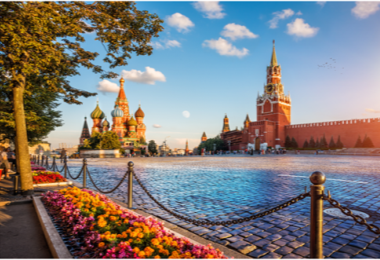
The Moscow Kremlin is one of the largest architectural and urban ensembles in the world. It is located at the centre of the Russian capital, on a high hill above the Moscow River. The height of the Kremlin walls, narrow loopholes, battle platforms, and evenly spaced towers all indicate that this is, first and foremost, a fortress. But once you enter the Kremlin, your impression will change. The 28-hectare territory is home to spacious squares and beautiful gardens, majestic palaces, and numerous churches. It is an entire city within a city, created over many centuries, which today preserves monuments of Russian architecture from the 14th to 20th centuries. They form the ensembles of the Cathedral, Ivanovskaya, Senatskaya, Dvortsovaya, and Troitskaya Squares, as well as the Spasskaya, Borovitskaya, and Dvortsovaya streets. All the Kremlin’s ancient and new squares constitute a single urban whole, but each has its own particular history and distinctive architectural appearance.
The Museums of the Moscow Kremlin include the Armoury Chamber and the architectural ensemble of Cathedral Square, which contains the Cathedral of the Assumption, the Cathedral of the Archangel, the Cathedral of the Annunciation, the Church of the Deposition of the Robe, the Patriarch’s Palace, the Ivan the Great Bell Tower, and exhibition halls in the Assumption Bell Tower and the One-Pillar Chamber of the Patriarch’s Palace.
Entry to the Kremlin grounds is through the Kutafiya Tower; entry to the Armoury Chamber is via the Borovitsky Gate. Since there are often queues, we recommend planning your visit to the Museums around 30–40 minutes in advance.

Tickets must be purchased by participants independently.
October 15, 2025
10:00-17:00

Museum

The State Tretyakov Gallery (10, Lavrushinsky Pereulok)

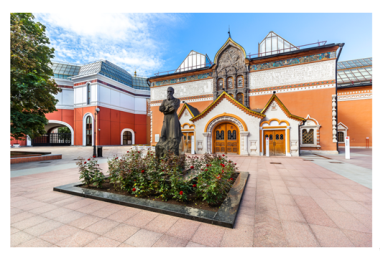
The historic building of the Tretyakov Gallery at 10, Lavrushinsky Pereulok is located within a complex of buildings, the core of which is a mansion dating from the second half of the 18th century which the Tretyakov family acquired in 1851. Pavel Tretyakov began collecting paintings by Russian artists in 1856 and displayed them in his living quarters. As his collection grew, new premises were needed to display it, and from 1872, extensions were added to the house. During Tretyakov’s lifetime, such work was carried out five times. In 1902–1904, the exterior of the building on the side of Lavrushinsky Pereulok was rebuilt according to a design based on a drawing by Viktor Vasnetsov. The new Russian-style façade became the emblem of the museum, whose collection grew rapidly in the 20th century. In 1936, another exhibition building was added. In 1986–1995, a major renovation of the building was carried out, which made it possible to increase the exhibition space by covering the inner courtyards. The building is a cultural heritage site of federal significance.
Today, the historic building of the Tretyakov Gallery houses an exhibition of Russian art from the 12th to the early 20th century. It occupies 62 rooms on two floors, is organized chronologically, and provides an overview of the development of the national artistic tradition.

Tickets must be purchased by participants independently.
October 15, 2025
10:00-17:00

Museum

The New Tretyakov Gallery (10, Krymsky Val)

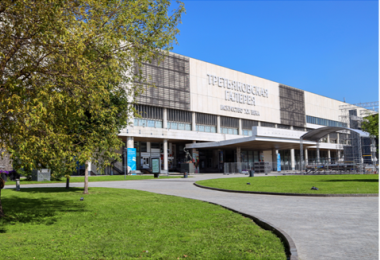
The New Tretyakov Gallery presents the most comprehensive permanent exhibition of 20th century Russian art in all its diversity: avant-garde, socialist realism, the ‘austere style’, underground art, and the latest trends. It hosts major retrospectives of great Russian artists and experimental exhibitions by young artists. The lecture hall and creative workshop offer a wide range of theoretical knowledge and practical classes for children, students, and adults on art of the 20th and early 21st centuries.
Halls 27–35 and 37 feature a recently refreshed exhibition of Russian art from the second half of the 20th century. In addition to well-known masterpieces from the museum’s collection, it also features new acquisitions and gifts that have been added to the Tretyakov Gallery’s collection in recent years. For the first time, the exhibition concludes with halls dedicated to ‘unofficial’ art of the 1960s–1980s and the latest trends of the late 20th century.

Tickets must be purchased by participants independently.
October 15, 2025
11:00-19:00

Museum

The Pushkin State Museum of Fine Arts (12, Ulitsa Volkhonka)

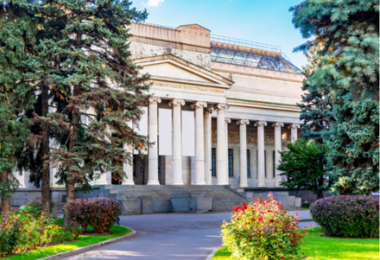
The Pushkin State Museum of Fine Arts is a museum complex with one of Russia’s largest collections of foreign art. Today, the museum is home to about 700,000 works from different eras, ranging from Ancient Egypt and Ancient Greece to the beginning of the 21st century. One of the museum’s most exceptional collections is its collection of 19th and 20th century French art, which is one of the most famous in the world.

Tickets must be purchased by participants independently.
October 15, 2025
11:00-18:00

Museum

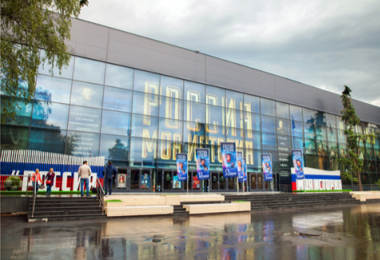
Russia: My History historical park (Pavilion 57, 119, Prospekt Mira)

The Russia: My History multimedia parks offer gigabytes of history at your fingertips in 24 cities. Each park provides a fascinating journey, featuring original installations, cinemas, interactive exhibits, and quests.

Tickets must be purchased by participants independently.
October 15, 2025
17:00-18:00

Еxcursion

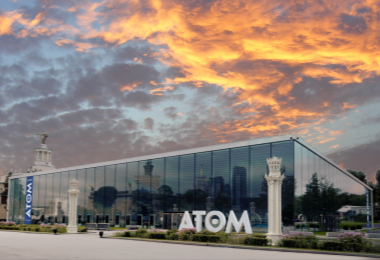
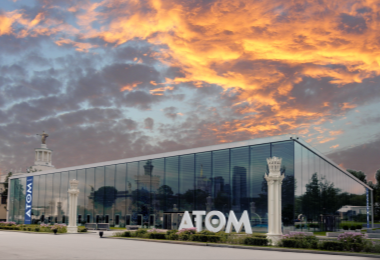
The ATOM Museum (119/19A, Prospekt Mira)

During the excursion, visitors may learn about the history of the creation of the first domestic atomic bomb, see models of nuclear icebreakers and submarines, and watch the Atomic Symphony, a light and music show that demonstrates how a modern water-cooled nuclear reactor works.

Access is by ticket, with advance registration in the Roscongress personal account. After registration, tickets must be picked up at the museum ticket office. The tour group will meet inside the ATOM Museum, by the Sphere art installation.

October 15, 2025
18:00-19:00

Еxcursion

The ATOM Museum (119/19A, Prospekt Mira)

During the excursion, visitors may learn about the history of the creation of the first domestic atomic bomb, see models of nuclear icebreakers and submarines, and watch the Atomic Symphony, a light and music show that demonstrates how a modern water-cooled nuclear reactor works.

Access is by ticket, with advance registration in the Roscongress personal account. After registration, tickets must be picked up at the museum ticket office. The tour group will meet inside the ATOM Museum, by the Sphere art installation.

October 15, 2025
19:00-21:00

Performance

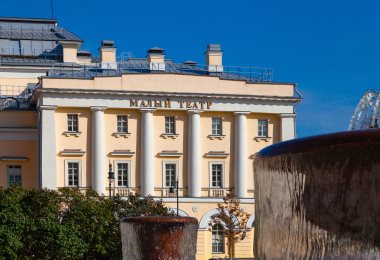
The Cranes Are Flying State Academic Maly Theatre (Main Stage) (1, Teatralnaya Ploshchad)

Responding to major historical events has long been a defining tradition of the Maly Theatre. This production by Andrey Zhitinkin, based on Viktor Rozov’s celebrated play The Living Forever, seeks to revive the events, actions, and emotions of those who lived through the Great Patriotic War. The pain of loss, honour and duty, sincere love, and opportunism come alive in our hearts once again.

Tickets must be purchased by participants individually.

October 15, 2025
19:00-22:00

Performance

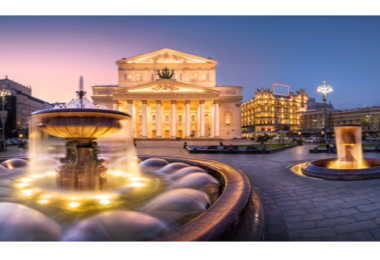
Yuri Possokhov’s ballet The Queen of Spades Bolshoi Theatre (Historic Stage) (1, Teatralnaya Ploshchad)

The idea to stage The Queen of Spades came from Yuri Possokhov. He is one of the leading literature-oriented choreographers of our time (perhaps only John Neumeier could be considered a rival) and is especially fond of “re-reading” Russian literature on the ballet stage. The plot plays an important role in his choices but is never an end in itself.

For Possokhov, The Queen of Spades is a special chapter in both his life and creative work. He is also a devoted opera lover. In this production, the twists of the original literary story and the canonical opera libretto intertwine. The music was composed by Yuri Krasavin for the Bolshoi, inspired by Pyotr Tchaikovsky’s score. The result is a kind of third, composite version of the story. Possokhov wanted to stage it partly because he had long reserved a crucial idea for this work: he leads Hermann to repentance and hopes the audience will feel compassion for his hero and forgiveness.

The whirl of glittering society balls gives way to mad card dances led by the sly Ace-cheat. The card game becomes a fever dream in Hermann’s mind, conjuring a lurking Seven of shadowy doubles. This same imagination drives him into panic, trapped as if in a cage, fleeing the terrible ghost of the dead Countess inside a transparent yet sealed cube. It is the madness into which his soul sinks, the barracks where he lives, the Obukhov Hospital where this story will take him. Liza is compassionate, yet her happiness lies with another man, Yeletsky. The duets, built on classical ballet vocabulary and charged with love as struggle or love as pity (Liza with Hermann, Liza with Yeletsky), feel even more dramatic beside the calm, carefree pairings of Polina and Tomsky.

Alongside the human characters and the ghost, another presence becomes almost a hero itself: the city of St. Petersburg. Set designer Polina Bakhtina, working at the Bolshoi for the first time, created it through ominous tapestry-like patterns, a giant time-worn mirror at the back, gold frames fading into a misty enfilade of grand halls, and rising veils of tulle. The result is an image of a majestic yet secretive and threatening city, existing somewhere between the present and the past, between two worlds, one almost a mirage and the other not entirely real.

Tickets must be purchased individually.

October 15, 2025
19:00-22:00

Performance

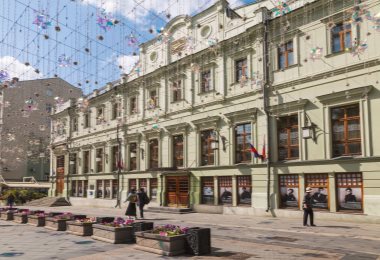
The Master and Margarita Moscow Chekhov Art Theatre (3, Kamergerskiy Pereulok)

The production premiered in 2011 and was dedicated to the 120th anniversary of Mikhail Bulgakov, one of the Moscow Chekhov Art Theatre’s key authors. The action of his final and iconic work, the most enigmatic novel of the 20th century, was moved by the creators of this stage version into today’s Moscow, deep within the city’s metro system. The Master and Margarita was directed by the Hungarian stage and film director János Szász, winner of numerous international film festival awards. Oleg Tabakov, then artistic director of the Moscow Chekhov Art Theatre, said after seeing the performance: “I think János Szász has managed to bring to life this story of great love, a story about how love gives talent the strength to fight the whole world. After all, the Master writes because Margarita loves him.”

Tickets must be purchased individually.